Why MMA is Growing in South Asia Faster Than Any Other Sport

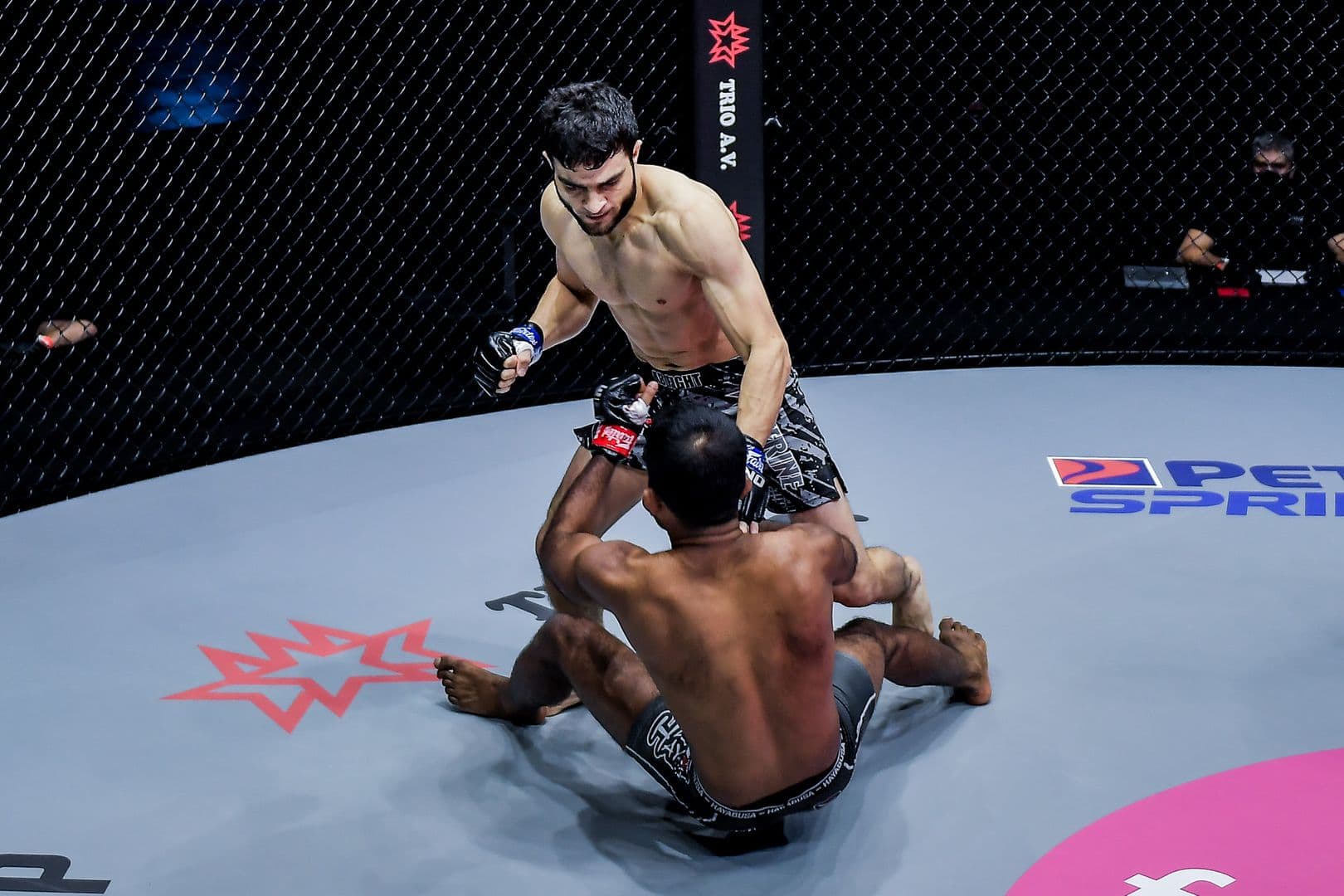
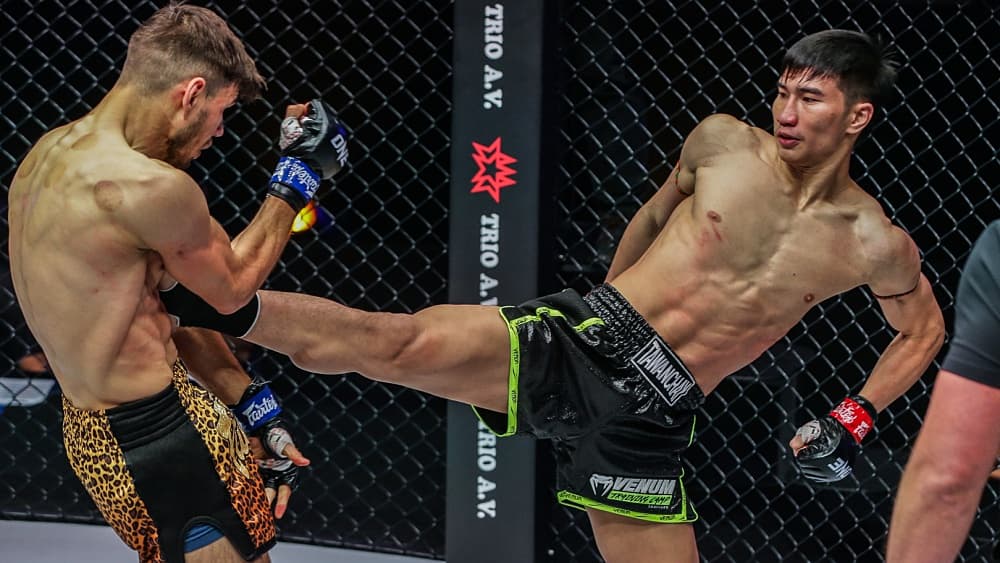
There is a moment that happens in every sport before it goes mainstream. A quiet tipping point. A shift you can feel before you can prove it with numbers. Cricket had it in South Asia decades ago. Football had it in East Asia in the 1990s. And right now, in 2026, mixed martial arts is having that exact moment across Pakistan, India, Bangladesh, Nepal, and Sri Lanka.
The gyms are fuller than they have ever been. The YouTube channels are pulling numbers that shock even veteran promoters. Teenagers who grew up watching UFC highlight reels on their phones are now lacing up gloves and drilling takedowns before school. Parents who once steered their children toward cricket bats are quietly asking coaches whether their kid has what it takes.
MMA growth in South Asia is not a trend. It is a structural shift in how an entire region relates to combat, competition, and identity. And understanding why it is happening — why MMA specifically, and why now — tells you something important not just about sport, but about South Asia itself.
The Numbers Do Not Lie
Let us start with the hard evidence, because the numbers are genuinely startling.
In 2019, there were an estimated 200 to 300 registered MMA gyms across the entire South Asian subcontinent. By 2025, that number had crossed 2,000 — a tenfold increase in six years. Pakistan alone went from fewer than 30 dedicated MMA training facilities to over 300. India, which now has a functioning national MMA federation affiliated with the International Mixed Martial Arts Federation (IMMAF), has produced over 150 competitive fighters who have competed in international sanctioned bouts in the last three years.
Social media paints an even clearer picture. UFC content in Urdu, Hindi, and Bengali regularly pulls millions of views. Pakistani MMA content creators have built audiences in the hundreds of thousands. When a South Asian fighter lands even a regional title fight, the engagement on local sports pages rivals cricket match coverage — something that would have been unthinkable five years ago.
The sport is not just being watched. It is being lived.
Why MMA and Not Something Else?
This is the question worth sitting with. South Asia is not short of sports culture. Cricket is practically a religion. Kabaddi has deep roots. Football, hockey, squash — all of these have passionate bases. So why is MMA the one that is growing faster than everything else right now?
The answer is not simple, but it is honest: MMA is the sport that feels real to a generation that has grown up seeing everything else feel manufactured.
Cricket in South Asia, for all its cultural power, has become inseparable from money, politics, board controversies, and the suffocating weight of national expectation. Breaking into professional cricket without connections or a certain kind of background is, for most kids, a fantasy. The pathways are narrow, opaque, and deeply unfair.
MMA is different. You can start from zero. You walk into a gym, you train, and within months you are competing. Nobody asks where you went to school. Nobody cares who your father knows. The cage is one of the most honest environments a young person can step into, and in a region where social hierarchies can feel impossible to escape, that honesty is magnetic.
There is also the physical reality of MMA training itself. It is demanding in a way that builds visible, measurable confidence. Fighters in South Asian gyms — many of whom came from working-class backgrounds, some from troubled ones — consistently describe the same transformation: they came in afraid, and they left feeling like they understood themselves. That is not a small thing. That is the kind of thing that spreads.
The Role of the UFC and Global MMA Media
You cannot tell the story of MMA growth in South Asia without talking about the UFC and how global MMA media has reached the subcontinent through digital channels.
The UFC's decision to expand its streaming availability in South Asian markets was significant. When fights became accessible — legally, affordably, in local languages — the dam broke. A kid in Lahore could watch Israel Adesanya dissect an opponent with the same clarity as a kid in Los Angeles. A teenager in Dhaka could pull up Khabib Nurmagomedov's greatest moments and watch a Muslim man from a modest background become arguably the most dominant fighter on the planet.
That last point matters more than any promotional strategy. Khabib Nurmagovedov did not just win fights. He represented something. He prayed after victories. He spoke about family and discipline. He carried himself with a dignity that resonated deeply in predominantly Muslim communities across Pakistan and Bangladesh. When South Asian MMA fans talk about who first made them believe the sport was for them, Khabib's name comes up constantly.
Similarly, ONE Championship — the Singapore-based MMA and martial arts organization that has invested heavily in South and Southeast Asian markets — has done extraordinary work in making the sport feel local. Their events in India, their partnerships with South Asian athletes, and their focus on fighters who come from wrestling and grappling traditions common in the subcontinent have all fed the growth.
The Wrestlers Are Coming
Here is something outsiders often miss about why MMA is growing so fast in South Asia: the region already had world-class combat sports athletes. They just did not know it yet.
South Asia has a rich tradition of wrestling. Kushti — the ancient form of Indian and Pakistani wrestling practiced in akharas, traditional mud-pit training grounds — has produced phenomenal athletes for centuries. These wrestlers have elite grappling instincts, extraordinary physical conditioning, and a mental toughness forged through years of brutal training with minimal resources and recognition.
When kushti wrestlers started crossing over into MMA, the results were immediate. Their takedown ability, ground control, and pain tolerance gave them a natural foundation that takes years to build in fighters who start from striking backgrounds. Coaches who began introducing wrestling-based fighters to striking and submission grappling found that the transition was faster than expected. The base was already there.
The same is true across other parts of the subcontinent. Nepal has a deep tradition of combat sport culture tied to the Gurkha legacy. Sri Lanka has produced strong judoka. Bangladesh has a growing community of athletes coming from traditional wrestling and kickboxing backgrounds.
MMA did not arrive in South Asia as something foreign that needed to be imported whole. It arrived as a framework that could absorb and legitimize what was already there.
Pakistan: The Unexpected Epicenter
If you had to pick one country that represents the MMA explosion in South Asia most vividly, the answer might surprise you: Pakistan.
Pakistan's MMA scene has grown with a speed and intensity that has caught even regional observers off guard. Karachi, Lahore, and Islamabad now have thriving gym cultures. Promotions like Brave Combat Federation — which has historically invested in Pakistani events — have helped create competitive infrastructure that gives fighters a pathway from local gyms to international bouts.
What makes Pakistan particularly fascinating is how the sport has taken root across economic lines. In the upscale areas of Karachi, you have performance-focused MMA academies with modern equipment, sports science support, and structured programming. Twenty minutes away, you have rooftop gyms and repurposed spaces where fighters train with whatever they have — and produce results that compete with anything the well-funded academies put out.
Pakistani fighters competing internationally have begun accumulating wins that are hard to ignore. The national federation has worked to bring the country's athletes into legitimate IMMAF pathways, and the results are beginning to show on scoreboards and in belt collections at the regional level.
There is also a cultural driver that is particular to Pakistan. Wrestling and combat sport have never been considered dishonorable there — quite the opposite. Physical bravery, competitive spirit, and martial skill are admired qualities. MMA provides a modern stage for values that already had deep cultural resonance.
India: Scale, Infrastructure, and the Long Game
India approaches MMA differently, as India approaches everything — at massive scale and with the slow-building momentum of the world's most populous country.
The Matrix Fight Night promotion has been one of the most important domestic forces in Indian MMA, providing a competitive platform for Indian fighters and helping establish a professional culture around the sport. The Super Fight League, despite its ups and downs, kept MMA visible during years when the sport was still finding its footing commercially.
Where India's MMA growth is most interesting is in the tier-two and tier-three cities. Delhi and Mumbai have had active MMA communities for over a decade. What is new is the emergence of serious training centers in cities like Pune, Ahmedabad, Jaipur, and Kochi. The sport is decentralizing geographically, which is always a sign of genuine cultural penetration rather than metropolitan trend-following.
India also has the advantage of a growing sports technology and fitness industry that intersects naturally with MMA. The concept of functional fitness, combat conditioning, and martial arts training has gone mainstream in Indian urban culture in a way that creates a feeder system for the sport. People who start training for fitness find themselves drawn into competition. It is a pipeline that pays dividends.
The long-term trajectory for Indian MMA depends heavily on whether a homegrown fighter can break into the upper echelons of global competition. The country is close. Several Indian fighters have made significant progress in international promotions, and when one of them lands a UFC contract and wins on a major card, the growth curve is going to look vertical.
The YouTube and Social Media Effect
No analysis of MMA growth in South Asia is complete without an honest reckoning with social media's role — and not just in the obvious way.
Yes, UFC highlights go viral. Yes, reaction videos and breakdown content pull huge audiences. But what is really driving MMA growth at the grassroots level in South Asia is something more specific: local content creators who document their own training journeys.
A 19-year-old in Lahore posting his first sparring session. A woman in Bangalore documenting her transition from Muay Thai into MMA. A coach in Kathmandu putting out technical breakdowns of wrestling concepts in Nepali. This content does not get millions of views. It gets tens of thousands — but from exactly the right people, in exactly the right communities, at exactly the right moment of their interest.
The parasocial familiarity these creators build is extraordinarily powerful. When someone sees a fighter who looks like them, speaks their language, and trains in conditions they recognize, the psychological barrier to participation drops dramatically. MMA stops being something that happens somewhere else, to other kinds of people. It becomes something you could do. Maybe should do.
This grassroots content ecosystem is now mature enough that it is self-sustaining. New gyms open partly because local creators have built audiences that translate into walk-in inquiries. Fighters get local sponsors because content creation has demonstrated an engaged audience. The commercial and the cultural are now feeding each other.
Women and MMA: A Quietly Revolutionary Story
One of the most significant and underreported dimensions of MMA growth in South Asia is the participation of women.
In a region where female participation in combat sports has historically faced significant social resistance, MMA is doing something remarkable. Women are training in meaningful numbers across South Asian gyms — not in the dozens, but in the thousands. They are competing regionally and, in growing numbers, internationally.
The motivations are varied. Some come for self-defense. Some come because they saw Ronda Rousey or Valentina Shevchenko and felt something shift in their understanding of what a woman's body could do. Some come because a friend dragged them to a trial class and they never left. But they come, and they stay.
Coaches across the region describe female fighters as among their most dedicated students. The social pressure they train against — not just in the cage but in their families and communities — seems to produce a particular kind of focus. Women who choose MMA in South Asia are choosing it hard, and it shows in how they compete.
The visibility of these women — on social media, in local competitions, in national championship brackets — is also having a broader cultural effect. It is quietly but persistently reframing what strength looks like in a South Asian context, and that reframing has implications that extend well beyond sport.
The Infrastructure Challenge — And Why It Is Being Solved
For all the genuine excitement around MMA growth in South Asia, it would be dishonest not to acknowledge the challenges. Infrastructure is the biggest one.
World-class MMA training requires a range of expertise that is genuinely hard to assemble in markets that are still developing. You need coaches with deep knowledge of wrestling, Brazilian jiu-jitsu, Muay Thai, boxing, and the strategic integration of all four disciplines. You need sports medicine support. You need competitive opportunities that are regular enough to develop fighters without burning them out or leaving them with no one to test themselves against.
These things are expensive and take time to build. South Asian MMA gyms are, on average, still operating with fewer resources than their counterparts in the United States, Brazil, or even much of East and Southeast Asia.
But the gap is closing, and the mechanism closing it is worth understanding. South Asian fighters who have trained abroad — in Thailand, in the United States, in the UAE — are coming home. They are bringing technical knowledge, professional habits, and network connections with them. A new generation of coaches who are themselves products of the sport's international era are building gyms that look and function differently from the first generation of South Asian MMA facilities.
International promotions investing in the region — ONE Championship, Brave CF, and others — are also raising standards through the competitive demands they place on fighters. When you want to compete on an international stage, your gym has to get serious about preparing you for it. The market pressure from above is meeting the grassroots energy from below, and the result is an infrastructure ecosystem that is genuinely improving season by season.
What the Old Guard Got Wrong
For years, the narrative around MMA in South Asia was one of doubt. Combat sports insiders in other markets assumed the region's cultural preferences, economic constraints, and social conservatism around body contact sports would permanently limit the growth ceiling.
That narrative was wrong, and it was wrong in an instructive way.
It underestimated the entrepreneurial energy of South Asian gym owners who built training communities out of almost nothing. It underestimated the hunger of athletes who had been told their traditions of wrestling and combat were not 'real' sports. It underestimated the social media generation's ability to bypass traditional gatekeepers and discover the sport on their own terms. And it underestimated the deep cultural compatibility between South Asian values around discipline, sacrifice, family honor, and martial spirit and the specific demands and rewards of MMA.
The doubters were not entirely wrong to point to the challenges. The challenges are real. But they confused difficulty with impossibility, and in doing so, they missed what was coming.
What Comes Next
The near future of MMA in South Asia is not hard to sketch, because the trajectory is already visible.
Somewhere in the training rooms of Karachi, Lahore, Mumbai, Delhi, Dhaka, or Kathmandu, there is a fighter right now who is going to make a UFC or ONE Championship main event within the next three years. That is not optimism. That is arithmetic. The talent pool has grown large enough, the technical standards have risen high enough, and the competitive pathways have become structured enough that it is simply a matter of time.
When that fighter wins — and they will win, because they will arrive in the elite with something to prove and a work ethic built in conditions that would humble fighters from more comfortable markets — the growth curve will shift again. What is already impressive will become extraordinary.
More importantly, the institutional foundations being built right now will outlast the boom-and-bust cycles that sometimes accompany rapid sports growth. Federations, certified coaches, national championships, school programs in some cities, women's divisions with growing depth — these are the bones of a mature sport, not a fad.
The Bigger Picture
There is one more reason why MMA growth in South Asia matters, and it is worth naming directly even though it is harder to quantify.
Sport, at its best, gives people a sense of agency. A sense that they have some control over the outcomes of hard work and discipline. In societies where many young people feel trapped by circumstance — by poverty, by family expectation, by the absence of obvious paths forward — that sense of agency is not a small thing. It is, for many people, the difference between a life that feels navigable and one that does not.
MMA in South Asia is providing that sense of agency to a generation that needs it. Not for everyone. Not perfectly. Not without its own problems around safety, exploitation, and the darker corners of fight promotion. But in the gyms, at the amateur events, in the WhatsApp groups where fighters organize sparring sessions and share training footage — something real is happening.
The fastest-growing sport in South Asia is not just growing because the UFC streams well on cheap data plans, or because Khabib made it cool, or because investors saw an untapped market. It is growing because it fills a genuine human need in a genuinely human way.
And in combat sports, that is always the foundation of something that lasts.